中文简体
中文简体 Search
 Contact

Consultation/Cooperation
010-68711086HR Line
010-62137913-8605 Publish Date:
 Visits:
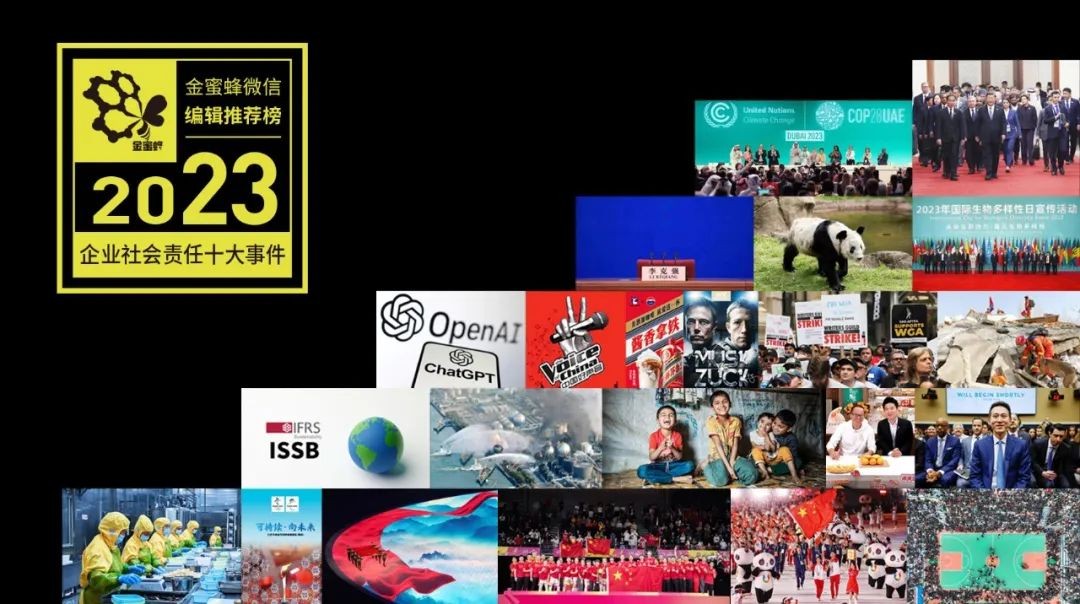
The year of 2023 marked the midpoint of the 2030 Agenda for Sustainable Development.
However,
just 7 years remain to achieve the Sustainable Development Goals (SDGs)
by 2030. However, global development is still undergoing profound
shifts. The intensified climate change, ongoing regional conflicts, and
the rise of artificial intelligence etc. paint a complex picture: a
tapestry of interdependence, tension, and opportunity woven against the
backdrop of unprecedented global change.
The Sustainable Development Goals Report 2023 therefore
warns of the possibility of escalating political instability,
disrupting the economy, and causing irreversible environmental damage if
global efforts are not doubled to achieve SDGs.
In 2023, we also saw breakthrough potential in many fields.
A
global surge in clean energy investment, continuous technological
breakthroughs in artificial intelligence (AI) and the Internet of
Things (IOT), and growing popularity of ESG and cultural
exchange showcase a convergence of resources, knowledge, and
technology in a more efficient and coordinated manner. Collaborative
international mechanisms are enabling nations to co-create innovative
solutions and collectively advance the 2030 Agenda for Sustainable
Development.
Since
2006, the China Sustainability Tribune has been selecting and
publishing the annual list of top 10 CSR events for 18 years. As the
first step in 2024, it selected the 2023 top 10 global CSR events (in
chronological order) to review and solute all efforts in social
responsibility development and welcome a better sustainable world.
The
top 10 global CSR events, brimming with boundless possibilities, offer a
broader perspective on solving global development challenges and stand
as a testament to the world's collective efforts to build a better
tomorrow.
01 EU published proposed legislation to extend the EU ETS to the shipping sector
On
June 5, a new EU legislation entered into force which extended the
scope of the EU Emission Trading System (EU ETS) to maritime transport.
It means that for shipping companies performing voyages arriving at,
within or departing from ports under the jurisdiction of an EU member
state, they will need to purchase allowance for GHG such as CO2 emitted
from specific ships.
The
new legislation establish a three-phase approach for mandatory emission
allowance for shipping companies: 40% in 2024, 70% in 2025 and 100% by
2026.
Reason for selection:
Green
transformation is the defining trend for shipping companies. By
including the shipping industry in EU ETS, the EU has taken a leading
role in limiting and gradually tightening the total carbon emissions of
the sector under its jurisdiction. It is a strong signal for companies
to accelerate the decarbonization and green transformation. It is
foreseeable that in the future, the shipping industry will face stricter
regulatory oversight and higher GHG emissions costs. Therefore,
shipping companies and export companies need to proactively take green
actions, improve energy efficiency management and elevate operational
levels to seize the opportunity in global competition.
02 ISSB issued its first two IFRS Sustainability Disclosure Standards
On
June 26, 2023, the International Sustainability Standards Board (ISSB)
issued its inaugural sustainability reporting standards—IFRS S1 General
Requirements for Disclosure of Sustainability-related Financial
Information (IFRS S1) and IFRS S2 Climate-related Disclosures (IFRS S2)
(together, the ISSB Standards). The ISSB Standards are designed to
ensure that companies provide sustainability-related information
alongside financial statements—in the same reporting package. The
Standards are effective for annual reporting periods after 1 January
2024 with earlier application permitted.
Reason for selection:
Establishing
a uniformed disclosure standard for sustainability-related issues is a
key initiative to support the formation of the ISSB. As a global
benchmark, ISSB Standards would promote to establish a consistent,
comparable, and reliable framework for sustainability-related standards.
This, in turn, would encourage companies to improve their management of
sustainability-related risks and opportunities, leading to high-quality
information disclosure. Ultimately, this framework can bridge the gap
between capital markets and investors, fostering greater transparency
and trust in the capital market's operations.
03 Joint Action Initiative on Fulling Corporate Social Responsibilities by Chinese Companies in Africa launched
On
June 30, during the Corporate Social Responsibility and China-Africa
Cooperation Summit Dialogue hosted by Alliance of Chinese Business in
Africa for social Responsibilities (ACBASR), a Joint Action Initiative
on Fulling Corporate Social Responsibilities by Chinese Companies in
Africa was commenced. The Initiative calls for companies in Africa
actively practice mission, deliver efforts into African development, and
draw Africa blueprint for sustainable development with African people
and international parties. The "100 Enterprises and 1000 Villages"
programs undertaken by the ACBASR also plans to mobilize at least 100
Chinese enterprises in Africa to actively fulfill their social
responsibilities in Africa within three years.
Reason for selection:
Many
Chinese companies operating in Africa are playing a crucial role in the
China-Africa partnership. Guided by principles of
extensive consultation, joint construction, and shared benefits, as well
as the correct concept of justice and interest, they're working
together with local communities to solve challenges like infrastructure
gaps and skills shortages. These companies are demonstrating exemplary
corporate responsibility through numerous well-designed projects. This
initiative highlights their collaborative approach, their deep
integration into local development, and their tangible contributions to
people's lives. This showcases the warmth, trust, and responsibility
that define Chinese companies in Africa.
04 European Sustainability Reporting Standards released
On
July 31, 2023, the European Commission adopted the first set of 12
European Sustainability Reporting Standards (ESRS). The ESRS are the
rules and requirements for companies to report on sustainability-related
impacts, opportunities and risks under the Corporate Sustainable
Reporting Directive (CSRD). The ESRS cover the full range of
environmental, social, and governance issues, including climate change,
biodiversity and human rights.
Reason for selection:
The
EU has long focused on the legislation and policy planning related to
sustainability-related standards. The launch of the ESRS standards
further proves its ambition and commitment. These clear guidelines,
building on the CSRD, pave the way for comprehensive and reliable
sustainability reporting by a wide range of companies within the EU.
This mandatory disclosure will not only improve individual companies'
information quality and sustainable management practices, but also send
ripples through supply chains.
05 Half of SDGs show moderate or severe deviations from the desired trajectory, UN reports
On July 10, 2023, the 2023 Sustainable Development Goals Report: Special Edition,
released by the United Nations, reveals that of the approximately 140
targets that can be evaluated, half of them show moderate or severe
deviations from the desired trajectory, and more than 30 percent of
these targets have experienced no progress or, even worse, regression
below the 2015 baseline.
Reason for selection:
The
report provides a comprehensive midpoint assessment of the 2030 Agenda.
While the existing gaps, the report also emphasizes the immense
potential for success through strong political will and the utilization
of available technologies, resources, and knowledge. Companies can
contribute to areas where urgent actions are needed, particularly in
scaling up investments in SDGs. The report also provides a vision of
hope by showcasing the progress the world has made so far and the
potential for further advancements.
On
October 18, UN Secretary-General António Guterres addressed at the
Third Belt and Road Forum for International Cooperation 2023 in Beijing.
He outlined that “Together, with the contributions of the Belt and Road
Initiative, we can turn the infrastructure emergency into an
infrastructure opportunity, supercharge the implementation of the
Sustainable Development Goals, and deliver hope and progress for
billions of people and the planet we share”.
He
also emphasized that the Belt and Road Initiative has included nearly
USD 1 trillion in cumulative investments across more than 3,000 projects
around the world.
Reason for selection:
The year of 2023 marks the 10th anniversary
of the Belt and Road Initiative. Over the past 10 years, the initiative
has made contributions to improving people's well-being across the
world. Now, the Belt and Road demonstrates that we have a historic
opportunity to build modern, green cities, communities, and
transportation and power systems that place resilience and
sustainability at the heart. That deliver services and decent jobs for
people in a sustainable manner.
A
total of 50 oil and gas companies representing more than 40 percent of
global oil production have joined the Oil and Gas Decarbonization
Charter (OGDC), which is aimed at achieving global energy transition
goals across the oil and gas sectors, at the COP28 climate summit in the
United Arab Emirates.
National
oil companies (NOCs) represent over 60 percent of the signatories to
the charter, which is the largest-ever number of NOCs committing to a
decarbonization initiative. The charter signatories have committed to
net-zero operations by 2050 at the latest, ending routine flaring by
2030, and near-zero upstream methane emissions, and increasing alignment
with broader industry best practices to accelerate decarbonization of
operations.
Reason for selection:
COP28
concluded with a historic agreement named The UAE Consensus to deliver a
new era of climate action. It calls on Parties to transition away from
fossil fuels to reach net zero. The Oil and Gas Decarbonization Charter
reflects the proactive engagement and transition of the oil and gas
industry in the global effort to reduce emissions. All Parties agreed
upon a clear roadmap to accelerate progress through a pragmatic global
energy transition and a “leave no one behind” approach to inclusive
climate action.
08 EU new rules to regulate AI
On
December 8, the Commission, Parliament and the Council of
the European Union reached an agreement on the EU AI Act. This
legislation marks the first-ever dedicated law on artificial
intelligence.
The flagship legislation
proposes a risk-based regulatory framework on artificial intelligence.
Systems containing deemed unacceptable risks, including cognitive
manipulation, predictive policing, emotion recognition in workplaces and
schools, social scoring, and certain remote biometric identification
systems, will be banned, with limited exceptions. AI companies would be
required to maintain human control over their algorithms, provide
technical documentation and have a risk-management system for
"high-risk" applications.
Reason for selection:
As
AI development is outpacing technology regulation, legal ethics, and
policy assessment, there is an urgent need for more visionary top-level
design and planning. As a comprehensive EU regulation, the EU AI Act
will help strengthen global AI governance and directly exert a huge
impact on AI research and development, as well as design and operation
of products and services.
As
reported on December 12, recently, the International Organization for
Standardization (ISO) has released the first part of their ISO 14068
series, ISO 14068-1: Carbon Neutrality.
The
standard provides a framework for achieving and demonstrating carbon
neutrality. It includes requirements for carbon neutrality commitments
and making carbon neutrality claims. It calls for the engagement of
business leaders in carbon neutrality management and reporting in each
reporting period, and specifies the detailed requirements for carbon
neutrality reporting.
Reason for selection:
ISO
14068-1:2023 is a complete and systematic international standard on
carbon-related issues. It is designed to the goal of carbon management,
that is, carbon neutrality. It reflects the organic combination between
traditional management systems and a pioneering concept of carbon
management. This will provide companies with unified approaches and
principles to achieve carbon neutrality and support better use of
targets and descriptions regarding carbon neutrality for organizations
and products.
The 78th United
Nations General Assembly officially designated the Lunar New Year, also
know as the Chinese New Year, as a UN floating holiday.
The
official recognition of the Chinese New Year as a UN holiday fully
showcases the influential power of Chinese civilization, which will
promote exchanges and mutual learning among diverse world cultures and
actively embody the UN's values of diverse and inclusive cultural
ideals.
Reason for selection:
The
Spring Festival, as a traditional Chinese holiday featuring family
reunion and good wishes for the coming year, not only bears the ideas of
the Chinese civilization of peace and harmony but also carries the
common values of humanity such as harmonious family, social inclusion
and sound relationship between man and nature. This decision not only
indicates an increasing global recognition of and respect for Chinese
culture, but also reflects the active promotion of global cultural
diversity. It provides a broader platform for cultural exchanges and
communication around the world.
About the “2023 Top 10 Global CSR Events”
As
an annual record of the CSR policies and practices, China
Sustainability Tribune has been selecting and publishing the annual list
of top ten CSR events for 18 years since 2006.
In
order to ensure a more comprehensive, accurate, open and transparent
selection, we seek opinions from external experts from governments,
companies, universities and research institutions in the field of CSR to
ensure the professionalism, authority and transparency.
·
Guo Xiuming, former Associate Counsel, Department of Policies, Laws and
Regulations, Ministry of Industry and Information Technology
· Xia Guang, Deputy Head of All-China Environment Federation
· Lei Hong, former Vice President of Chinese Sociological Society, Dean of HUST-GoldenBee CSR Research Institute
· Chen Yuanqiao, Researcher at China National Institute of Standardization
· Cheng Duosheng, former Director of Innovation Working Department of Chinese Enterprises Federation
· Liang Xiaohui, Chief Researcher of Social Responsibility Office, China National Textile and Apparel Council
·
Qian Xiaojun, Professor, Associate Dean of Academics at Schwarzman
College, Director of Research Center for Green Economy and Sustainable
Development, Tsinghua University
· Xue Dayuan, Professor and Doctoral Supervisor of Minzu University of China
·
Li Li, Professor of the University of International Business and
Economics, Expert of the Beijing 2022 Winter Olympics Sustainability
Advisory Committee
·
Guo Yi, Professor of School of Economics, and Director of Business
Environment Research Center, Beijing Technology and Business University
(BTBU)
· Zhang Jiutian, Executive Director of Green Development Institute at Beijing Normal University
· Yu Zhihong, President and Editor-in-Chief of China Sustainability Tribune
· Yin Gefei, Chief Expert of GoldenBee Thinktank
· Guan Zhusun, Executive Dean of HUST-GoldenBee CSR Research Institute
Thanks to experts who participated in the selection of “2023 Top 10 Global CSR Events”.
Next article:2023 top 10 CSR events in China
Previous article:GoldenBee's participation in sustainability of food industry