中文简体
中文简体 Search
 Contact

Consultation/Cooperation
010-68711086HR Line
010-62137913-8605 Publish Date:
 Visits:
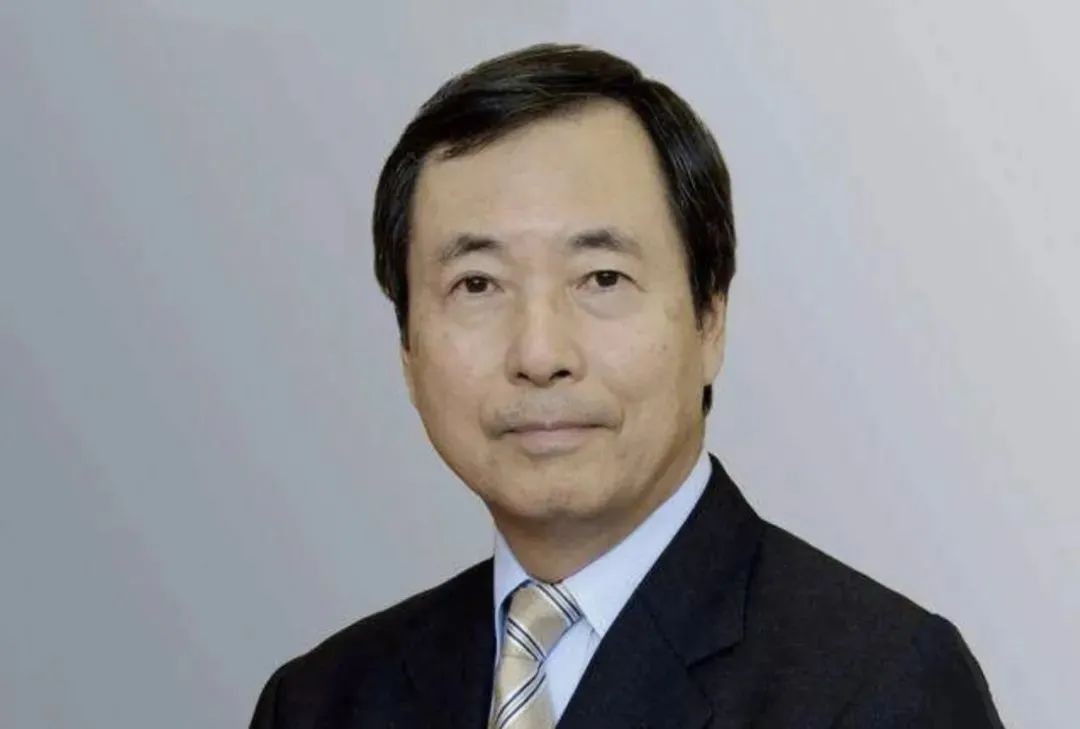
Recently, the 15th International Conference on CSR Reporting in China has been held. The guests had in-depth discussions on the latest trend of global corporate social responsibility (CSR) report, the way of CSR communication, the value exploration of CSR report and other issues.
Masao Seki, Steering Committee Chairman of the Council for Better Corporate Citizenship (CBCC) shared the latest development of social responsibility disclosure in Japan from four points in this Conference.
The following are highlights of Masao's speech:
Hello everyone, I am very pleased to be part of this Conference. Today, from a business perspective, I would like to introduce some of the key trends in sustainability reporting in Japan. In this presentation, I would like to take up 4 points: integrated reporting, TCFD, human rights due diligence reporting, and impact assessment and disclosure, all of which are of importance and concern globally.
Integrated Reporting The
number of Japanese companies issuing integrated reports continues to
increase, from 60% in 2019 to 78% in 2021. Listed companies have more
relevant disclosure, and the percentage of companies that disclose
materiality in integrated reports is also increasing. Although the
progress has been made, I feel that there is still a lot of work to be
done to improve the content of disclosure, make it a mature integrated
report which helps companies engage in meaningful dialogue with
investors. The
release of such reports shows that these companies truly realize their
social values and fulfill social responsibilities, not just focusing on
economic profits and business growth. In fact, such a trend is
consistent with global development. The integrated reports and the
disclosure of major issues is gaining more global attention with new
progress. It’s hoped that integrated reports which are truly helpful to
the public and can bring some useful information will be released. Climate Change As
of October, this year, Japan has 1,077 companies, with the largest
number of companies in the world supporting the TCFD, or Task Force on
Climate-related Financial Disclosures. These companies come from
different economic fields and sectors, showing their great attention to
the TCFD. In fact, an increasing number of companies are disclosing governance, strategy, risk management, and metrics and targets in accordance with the TCFD framework due to
the increasing strict regulation on climate by related organizations. Investors are
also highly interested in corporate financial disclosures related to
climate,
and companies are working to disclose them targeting the domestic and overseas institutional investors as
important stakeholders. It can be said that such
disclosure is no longer the disclosure of
non-financial information, but the disclosure of financial information. Human Rights Due Diligence In
Japan, we established the Charter of Corporate Behavior as a basic
principle for responsible corporate behavior, which is about business
and human rights. We hope that Japanese economic organizations,
including enterprises, will formulate a charter of corporate behavior
and abide by the basic principles and take actions. As
of 2020, only about 30% of companies were implementing human rights due
diligence. In light of this situation, we provided companies with
related guidance, placing special emphasis on raising awareness and
promoting action among industry associations. In
October 2020, the Japanese government also established the National
Action Plan on business and human rights, second in Asia after Thailand.
Japanese companies, regardless of size or industry, should respect
internationally recognized human rights and introduce human rights due
diligence processes. This
September, Japanese government developed handbook and guidelines
include information disclosure as an indispensable step in human rights
due diligence. Human rights due diligence is a PDCA cycle to fulfill
corporate responsibility to respect human rights, and fulfill
accountability to stakeholders. Future Challenges and Prospects in Reporting In
June last year, we prepared a report summarizing discussions on the
measurement and evaluation of SDGs initiatives. Impact assessment and
reporting are important in order to avoid criticism as an SDG wash and
make them truly meaningful initiatives that create social value and
improve corporate value as well. The report recommends that appropriate
KPIs should be set for the SDGs targets, the results of impact
assessments should be reported, and that this should be linked to
improved access to investment. Among all, I believe that the most
important thing is to understand the true purpose of impact assessment.
The aim is to improve, better manage and deliver meaningful results in
the efforts we make. In
line with this mindset, in addition to the TCFD, the TNFD, or framework
for financial disclosures related to nature is being developed and has
already reached the beta-version stage. Beyond that, discussions have
already begun on the TSFD, that is, the formulation of standards for
financial information disclosure in terms of social aspects. (Compiled from the speaker's speech, and the content was not reviewed by himself.)
Last
year, the WBCSD published its Vision 2050 recommendations, in which it
summarized the challenges to be addressed for sustainable development in
three simple words. They are Climate, Nature, People, and just as
climate change is now a climate emergency, nature loss is in crisis, and
widening inequality is reaching a level that cannot be ignored. Within
our planetary boundaries, we must transform our economies and societies
to achieve fair and inclusive growth and enable more than 9 billion
people to live well by 2050. To that end, business should explore ways
to disclose our strategies and integrated efforts to address the three
themes of Climate, Nature and People.